Guide to Automated API Security Testing
Secure every API with AI-powered, automated API security testing that discovers all endpoints and stops OWASP API and BOLA risks before production.
APIs run everything from mobile apps and fintech platforms to enterprise workflows and LLM-driven systems. They are the heart of the modern Web, Mobile, & Data integration architecture. OWASP continues to show that modern breaches rarely stem from traditional web vulnerabilities. Instead, they originate from broken authorization, logic gaps, and data-exposure issues in the API layer, Making web security, pen-testing, and WAF approaches obsolete against the top API exploits.
These aren’t theoretical risks. A multi-year analysis of 50+ API breaches revealed that nearly all stemmed from authentication, authorization, or data-exposure failures, the same categories modern attackers repeatedly exploit, according to the API Security Market Report. With API breaches rising 80% year-over-year and exposed records surging 214%, as reported by FireTail’s 2024 study, automation has become mandatory, not optional.
APIsec addresses this reality as a cloud-native automated API security testing platform that discovers every endpoint, generates AI-driven attack paths, validates business logic, and prevents data exposure before production.
What Is an Automated API Security Testing Platform?
Automated API security testing platforms evaluate APIs beyond injection checks. They analyze multi-step flows, permission patterns, role behavior, and chained logic sequences.
For terminology clarity, teams can reference the API glossary, which outlines how API testing differs from conventional vulnerability scanning.
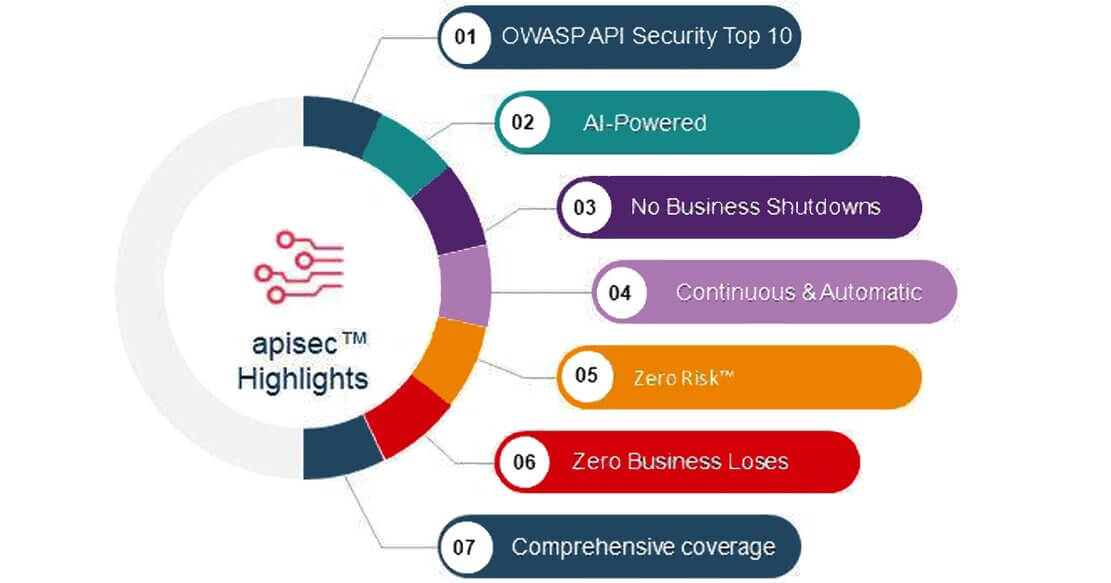
APIsec is the cloud-native continuous API security testing platform, that instantly detects and fixes OWASP API Security Top 10, Business-Logic, Role-Configuration & Access-Control vulnerabilities in the API layer.
- OWASP API Security Top 10: Command & Injection Categories Penetration Testing Use-Cases & Compliance
- AI-Powered: APIsec bot instantly writes custom validations as playbooks for your APIs, giving you full control and visibility of your security coverage. And it automatically detects, prioritizes, and helps you fix vulnerabilities.
- No Business Shutdowns: Never lose a Single Record! Never Pay Business-Breaking Fines for Compliance, Legal, or Brand Damage.
- Continuous & Automatic: APIsec integrates with all major CI/CD tools. And it automatically manages vulnerabilities across all major engineering issue-trackers and IT ticketing systems. Not only does automation helps you save time and money, but it also enables you to share and resolve issues a lot faster.
- Zero Risk: APIs can Go-Live with Zero Business Risk
- Zero Business Loses: Never Lose a Single Customer Record! Never pay Business-Breaking Fines for Compliance, Legal, & Customer Damages.
- Comprehensive Coverage: Covers Dozens of Modern Exploits in Business-Logic, Roles Assignment, Access-Controls, Multi-Tenancy, & Injection Flaws.
Where APIsec Fits in the API Security Testing Landscape
1. DAST & Vulnerability Scanners
These tools test for traditional injection categories but do not understand API workflows or multi-step logic. APIsec highlights these limitations in its article on vulnerability scanning.
2. API Monitoring Tools
Useful in production, but do not prevent logic or authorization flaws before release.
3. Automated API Security Testing Platforms (APIsec)
APIsec falls into this category: fully automated logic and authorization testing integrated into CI/CD workflows.
API Discovery and Coverage: Mapping Every API You Actually Run
Most organizations underestimate how many APIs they operate. Shadow APIs, deprecated endpoints, and undocumented versions consistently trigger large-scale breaches. FireTail’s 2024 report notes that 1.6 billion records have been leaked through API-related incidents, many beginning with hidden or forgotten endpoints.
APIsec discovers APIs through:
Specifications
OpenAPI/Swagger ingestion for documented endpoints. Teams wanting specification best practices often use the guide for OpenAPI documentation.
Gateways and Traffic
Gateway logs expose undocumented or forgotten versions.
Behavioral Exploration
APIsec detects hidden parameters and optional flows the same way attackers would. This aligns with the guidance found in the shadow API discovery best practices.
Key Testing Capabilities: What APIsec Covers Automatically
OWASP API Top 10
APIsec validates all OWASP categories, including BOLA, Broken Auth, Excessive Data Exposure, and Improper Asset Management. Each category is outlined in the OWASP API Top Ten breakdown.
Business-Logic & Workflow Attacks
Business logic abuse is responsible for many high-impact breaches. APIsec simulates mis-sequenced steps, chained requests, and privilege escalation attempts. The importance of these flaws is detailed in the analysis of business logic vulnerabilities.
Role, Tenant & Permission Validation
APIsec evaluates API behavior across roles, tenants, and permission tiers.
AI-Generated Attack Scenarios
APIsec automatically generates thousands of attack variations per endpoint without scripting.
CI/CD Integration & Regression Testing
Every commit triggers full API testing. Once fixed, issues undergo continuous retesting.
Securing APIs Behind AI and LLM Applications
Modern AI systems rely on APIs for model inference, embeddings, training-data pipelines, and operations. These surfaces are highly sensitive and prone to logic abuse.
APIsec strengthens AI/LLM pipelines by:
- Validating strict permission enforcement on inference endpoints
- Testing for data-leakage behavior around training datasets
- Detecting prompt-injection-adjacent multi-step abuse
- Preventing exposure of embeddings, PII, or proprietary training data
Teams can explore these risks through the article on LLM API security and prompt injection threats.
APIsec vs Traditional API Scanners
AI-Powered Attack Generation vs Rule-Based Scanning
Traditional scanners follow static signatures. They cannot identify role transitions, multi-step flows, or chained request abuse.
APIsec’s AI evaluates behavior, path combinations, and conditional states. It identifies logic flaws similar to those behind major multi-step breaches that traditional tools fail to detect.
Who Should Use APIsec?
APIsec is built for:
- AppSec / Security Engineering
- DevSecOps & Platform Teams
- Developers shipping microservices, fintech apps, or LLM pipelines
- Regulated industries requiring continuous logic testing
Akamai’s survey found 84% of security teams experienced at least one API incident in the last 12 months, with the average remediation cost in financial services reaching $832,801. These numbers reflect why heavily regulated sectors such as fintech, healthcare, and BFSI adopt automated API testing early. Many fintech teams refer to insights such as fintech API risks when evaluating platforms.
How APIsec Fits Into Your SDLC
1. API Ingestion from Specs, Traffic & Gateways
APIsec builds a full API inventory.
2. Coverage Mapping & Authentication Setup
Roles, tenants, tokens, and session flows are analyzed.
3. AI-Based Attack Scenario Generation
Each endpoint becomes hundreds of attack sequences.
4. Multi-Step Execution Engine
Tests run across staging or pre-production environments.
5. Risk Scoring & Prioritization
Issues are scored based on exploitability and impact.
6. Automatic Publishing to Trackers
Results push directly to Jira, GitHub, or ServiceNow.
7. Continuous Retesting Through CI/CD
Every new commit triggers regression testing.
Conclusion
APIsec brings automated, AI-driven, workflow-aware API security directly into engineering pipelines. It discovers every endpoint, validates authorization and business logic, integrates into CI/CD, and continuously retests fixes so issues never return. With API breaches rising and modern systems relying heavily on APIs, especially in AI, fintech, SaaS, and multi-tenant architectures, automated logic testing is no longer optional. It is the only reliable way to reduce real-world attack paths before production.
If your team wants to see how automated, logic-aware testing fits into your environment, you can request a guided walkthrough of APIsec’s platform to understand how it applies to your API ecosystem and engineering workflow.
FAQs
1. What are the top platforms for API security testing?
APIsec is the best choice for API security testing, offering AI-powered, end-to-end automated attacks that catch BOLA, data exposure, and logic flawswithout requiring you to write custom attack scripts. The platform’s approach is explained clearly in their automated testing guide.
2. How can API security testing be automated?
APIsec automates testing by converting OpenAPI specs into thousands of attack paths and executing them continuously. The platform’s automation model, explained in the API Testing Automation guide, requires no custom scripting from the user and catches BOLA and logic flaws instantly.
3. Where can I get automated OWASP API Top 10 coverage?
APIsec provides end-to-end automated OWASP API Top 10 coverage. Its engine tests for BOLA, Broken Auth, Excessive Data Exposure, and Improper Asset Management as defined in the official breakdown of the risks: OWASP API Top 10.
4. How do I ensure API security in a CI/CD pipeline?
APIsec’s CI/CD integration triggers full security tests on every commit, enabling shift-left validation of authorization flows and data handling. The process is outlined in the guide on secure pipelines: Security in CI/CD.
5. How does AI improve API security testing?
AI improves API testing by learning how APIs behave and creating attack paths that mimic real adversaries. APIsec applies this AI-based logic analysis to expose BOLA and data-exposure flaws reliably. Their BOLA guide explains this approach: BOLA Testing.
6. What should I look for in an API security platform?
Look for automated OWASP API Top 10 coverage, business-logic testing, CI/CD integration, and continuous attack simulation. APIsec delivers all of these in one platform, and their API Security Checklist outlines the essential capabilities: APIsec Checklist
7. What is an API scanning platform?
A scanning platform reviews endpoints for vulnerabilities, but APIsec goes further by running attacker-style dynamic exploitation attempts. This distinction is detailed in the platform’s explanation of scanning: Vulnerability Scanning.
8. What is an example of an insecure API?
An insecure API exposes sensitive data or allows unauthorized access. APIsec’s documented cases, like the Edulog BOLA flaw and the First American data-exposure issue, show how weak authorization and poor response filtering create real breaches.
Excessive Data Exposure
The deploy gate is the last control point
The depth of a human. The coverage of a machine.
Start free and see a proven exploit against your own application, or get a walkthrough tailored to your stack.